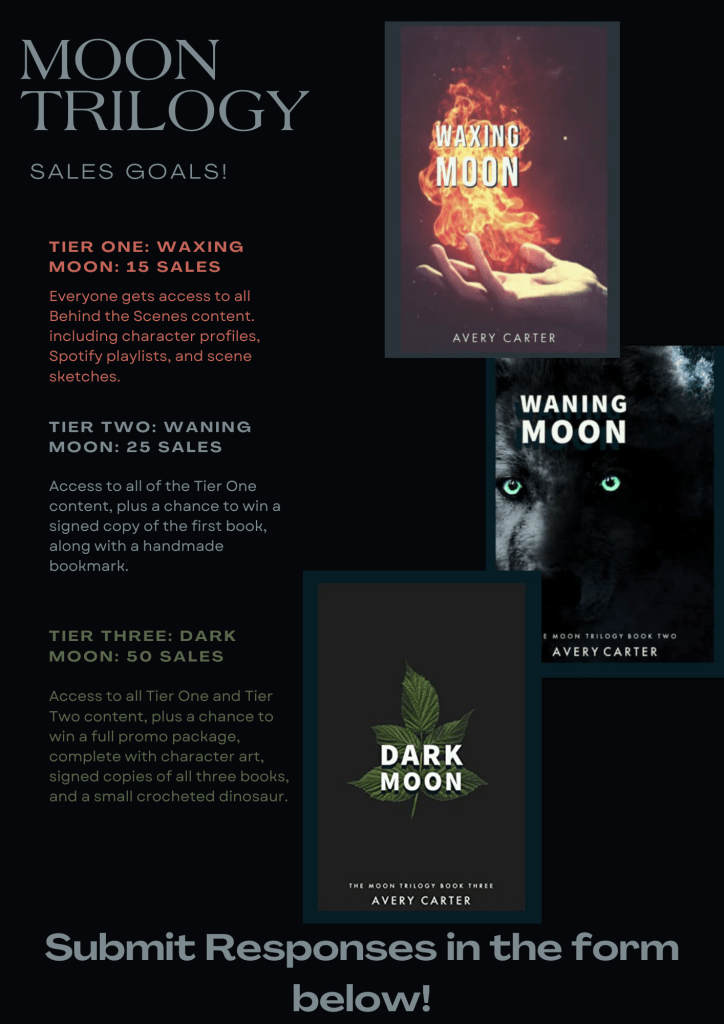
One of the worst things about being a writer is writing the follow-up to a well-received book. You’ve sat with the good reviews for a while, let them build up your self-esteem, and then… you have to write the sequel. Everyone can name at least one sequel that fell short of the high standards set by its predecessor, and hopefully everyone can also name a sequel that went above and beyond the standards that its predecessor set. While writing my own sequel to Waxing Moon, the first book in the Moon Trilogy, I picked up a few tips that helped Waning Moon stand apart and above the standards of the first book.
1: Add a new point of view or main character
If you’re stuck on how to make your sequel feel fresh and interesting, adding a new point of view can help bring a new perspective (pun intended) to the events of the story you are telling. Authors like Brandon Sanderson, Maggie Stiefvater, and Emily St. John Mandel are great examples on how to handle point of view changes within a single book. While you can simply label each chapter with the point of view character’s name, look for other ways to make your characters stand out from each other.
One of the things I did to make sure that readers knew the difference between Ashlyn and Talia, even without the point of view labels, was giving them their own unique details to focus on. Talia is a werewolf, so she mainly pays attention to the smells and sounds in her scenes. Ashlyn, on the other hand, focuses on what she can see and feel. They both use music analogies to help make sense of their surroundings, which helps keep the points of view connected. It also helps them feel like part of the same story, rather than two separate stories sewn together.
2. Specifically define the stakes, world, and character’s abilities
The best part of writing a sequel is that you can really start to dig into the central conflicts of your story. The heavy lifting of the worldbuilding is done. You did that in the first book, painting the rules your characters and world have to follow in broad strokes. Now you can get down to the nitty gritty details. If your character fails the task set, what, exactly, happens? What do they risk losing? What do they gain if they succeed? Most importantly: does that character want to succeed? You don’t necessarily have to answer these questions in the final edit, but knowing the answers yourself will help you fill out your character’s motivations and the stakes in place.
You can also take the sequel to start exploring aspects of the world you’ve established in the first book. Are there new places that are important to your characters that you haven’t fully explored yet? Do you have a secondary world that needs to be filled out more? The sequel is a great place to do this! It adds more stakes and fills out the world you’ve created. It can give your readers a stronger connection to your world or characters as well, since there will be more places that they can connect with.
3. Get Weird!
The main thing to remember is that you’re not writing for anyone except yourself. It can be easy to get stuck in your own head and focus on making everything perfect. While it’s important to stay consistent and keep your writing high quality, it’s also important that you are still enjoying yourself. I usually take the time in my sequels to get weird. Inject some humor to lighten a situation, or add a fun way for your characters to describe something.
In the case of Waning Moon, I took a dangerous trip through the Wildlands and gave Ashlyn a chance to make a terrible pun about the situation. After flying through a cloud of butterfly-looking creatures with razor-sharp wings, she deadpan calls them “cutterflies”. It’s a light moment in an otherwise heavy situation, and is also undeniably weird.
Final Thoughts
Writing a sequel shouldn’t be daunting, but it can often be difficult to feel like you can meet the expectations of a great first novel. Hopefully, these tips give you a place to start, and help make your sequel the best it can be!





 Avery Carter