Posted in Blog

Long Time No See!

I know I haven’t updated this website in a loooooong time, but that’s because I’ve been up to something exciting!

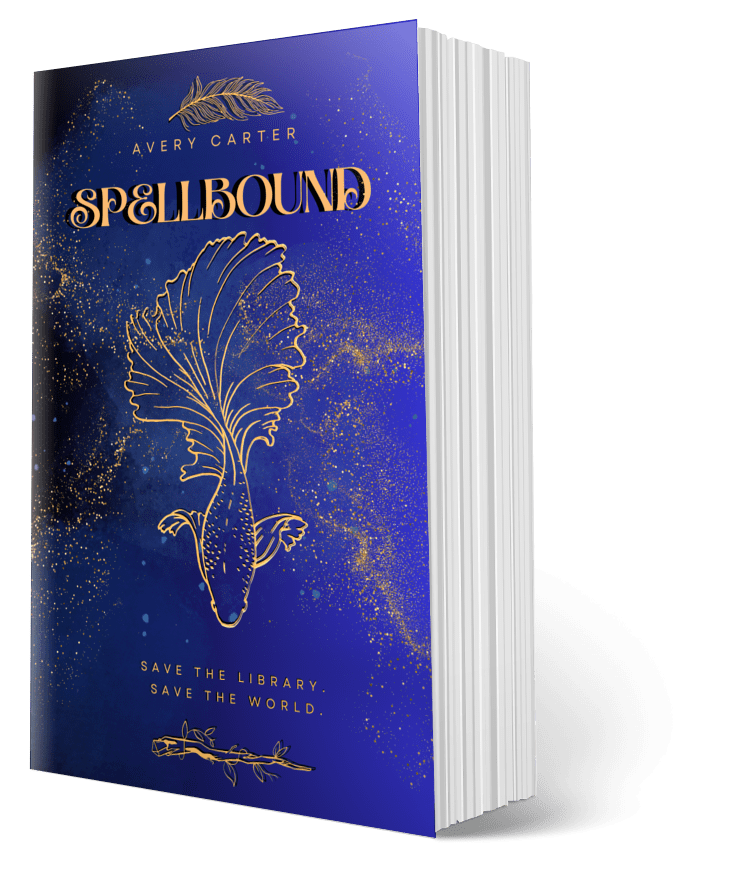
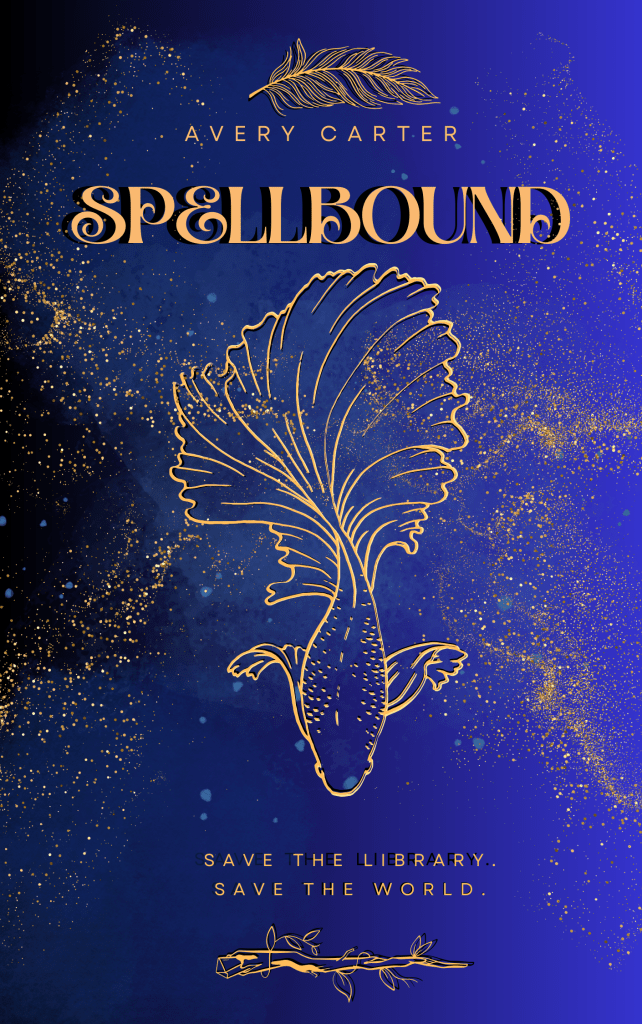
My new book, Spellbound, will be coming out May 18th! Pre-orders are available on Amazon now, and I have a special event running.

For a short time, you can apply for a FREE e-ARC of Spellbound! These ARCs will be going out on April 18th, one month before the release of the book. If you are interested in being part of the first round of readers for this new YA cozy fantasy, click the button below!

Posted in Blog

Beta Reader Discord: Open!

Hi everyone! I’ve recently opened a Discord server for beta readers. The link to join is right here:

But the link is only active for SEVEN DAYS. That’s right: the window for beta readers CLOSES in ONE WEEK! That means you have one week to join my beta reader discord and get early access to ALL of my upcoming books, series, and also a community where you can share your own writing for feedback and beta reading! It’ll be a lot of fun, and I’m excited to share it with all of you!

Posted in Blog, Sales Goal

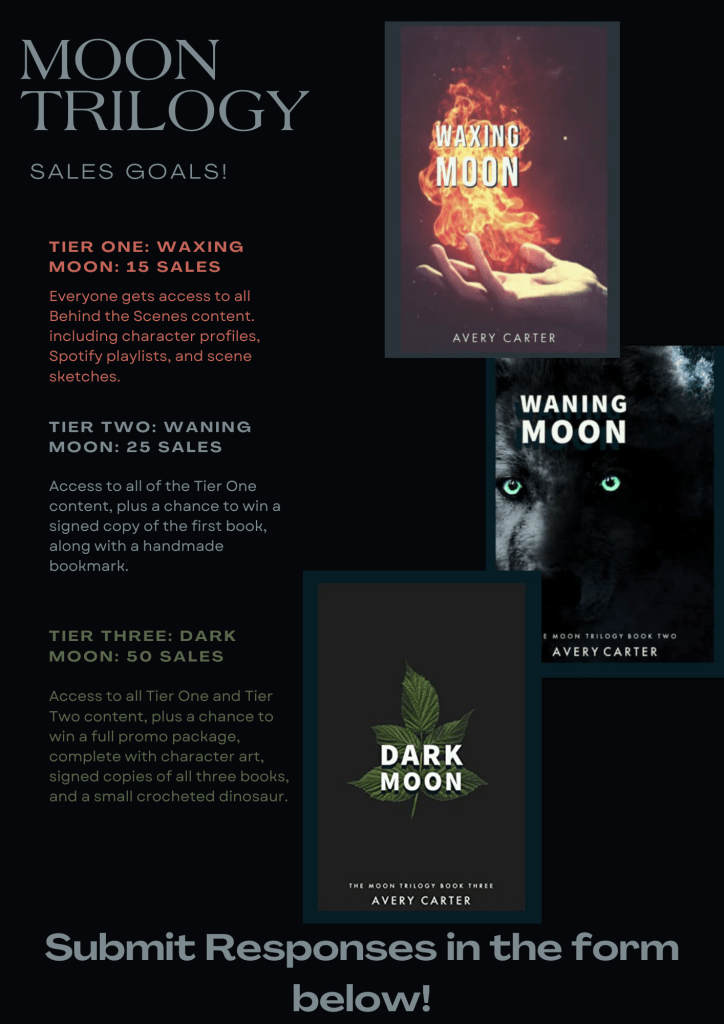
Dark Moon– Sales Goals!

Well, it’s been a long road, hasn’t it? You joined me in experiencing Ashlyn and Talia’s story just three years ago, but for me, this story has taken over a decade to come to full completion. I’m definitely not done with these characters yet. There are a few more stories down the road for them, but for now, let’s rest on our laurels and give these characters a much needed break.

To celebrate the release of Dark Moon, I’ll be holding a sales event! Each tier level of sales will come with its own rewards and special content, with book giveaways, handmade bookmarks, crocheted critters, and more!

Click here for the form!

Posted in Uncategorized

End of an Era: Finishing a Decade-Long Book Series

When I was sixteen, I bought a cool-looking dragon notebook from Barnes and Noble with my Christmas money. I had no idea what I would write in it, but later that week, an idea came to me: a girl with red hair, dreaming of a werewolf every night. I didn’t know it yet, but that small idea would eventually become Waxing Moon, my debut novel, and its sequel Waning Moon. Now, I’m working on the third and final installment in the Moon Trilogy, and all of the big, complicated feelings that come with it. How do I take these characters, who I have loved with, fought with, brought through the worst parts of their lives, and give them the ending that they deserve? How do I say farewell to the characters that have carried me through the last fourteen years of my life? How do I give them a satisfying ending?

Leaving a Crack in the Door

I just spent an hour trying to think of a satisfying response to those questions, and honestly? I can’t. There is so much that has happened in my life, so much that these characters have brought me through, that to just say goodbye to them feels unthinkable. So, I’ll just say: it’s not goodbye.

At least, not yet.

These books will always be a part of me. They will always be the deepest, darkest pieces of my life, pulled out of my chest and put on a page for readers to dissect. I once thought they would be my magnum opus. I realize now that those were the thoughts of a child, dreaming. I have so many more stories in me, little Avery. We’re not done yet. These characters will live on, as people discover our books and read the stories we created. The door isn’t fully closed yet. There’s still a sliver of light there.

The Way Forward

I still don’t know how I’ll feel when I’m finally finished with the last book. Will I feel sad or elated? Will I be scared? Will I be happy? One thing is certain: I will definitely feel. After so much nothing in my life, that’s a good thought to have.

After I finish the Moon Trilogy, I’m going to take a break to focus on finishing my MFA program. There are some new stories there that I’m working on, and I’m excited to start sharing with you. My Caelum stories are going to go on the back burner for the time being, and my thesis novel will be my main project. There might be some short stories posted between now and then, so be sure to keep your eyes out!

Thank you everyone for staying with me through this whole trilogy. I’m so glad I was able to share these characters and their story with you. Let’s take our next steps forward together!

Posted in Blog

New Book Giveaway!

Hi everyone!

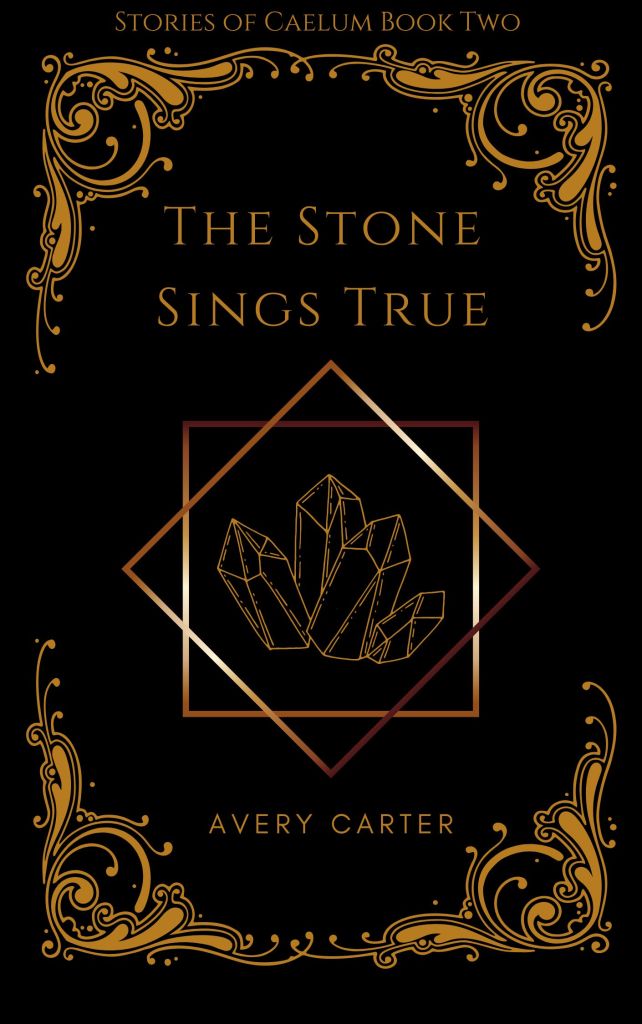
On April 1st, my new book The Stone Sings True releases on Amazon! In celebration, I have some exciting news.

First of all, the first book in my Caelum Stories, The Ghost and the Real Girl, is available for FREE on Amazon for the next week! This is a great chance to get introduced to the world of Caelum and its characters.

Second, I have a special event just for The Stone Sings True! Read on below for more details:

Every single crystal mentioned in this book is a real crystal of varying rarity. How many of the unnamed crystals can you name?

Yellow, brittle, similar shape to quartz: ____________

Colored gold, blocky shape, crumbles easily: ____________

Rarer, purple, shaped like quartz: ____________

Cloudy blue, rhombic structure: _____________

Cloudy white and common: ________________

Deep blue, sharply faceted, brittle: ___________

Navy blue, high copper content: _____________

How many do you think you got? Let me know in your review of the book! The first person to get all of them right will get a special crystal bundle as a prize!

Posted in Blog

Advice to a Young Writer

So you want to get published! That’s an amazing goal to have. I want to tell you though: it isn’t easy. You’re going to run into a lot of problems along the way, and sometimes you’ll feel like you want to quit. It is worth it, though. I want to make that clear. It’s absolutely worth doing. You have a story to tell, and no one else is going to tell it. Remember that.

The first step to getting published is deciding how you want to be published. Do you want the traditional publishing, where you get an advance and can see your books in bookstores, or do you want to be self-published, where you direct everything and keep most of your profits? There are ways to do a hybrid publishing as well, where some parts of your journey are self-directed, and others are guided by a publishing company. The best way to decide this is to determine what you want your goals to be in publishing. Every path has its own perks and its own pitfalls.

If you choose traditional publishing, get on Twitter and search for Pitch Madness under the hashtag #PitMad, and also pay attention to the #mswl or Manuscript Wishlist of different agents. Most of the publishing industry is on Twitter, and establishing yourself among that crowd is the best way to get your manuscript in front of agents. You can also cold-email agents with a query letter, but make sure you research the agent first. They should represent your genre and age level, and have their queries open. Remember, agents are people too. They have likes and dislikes, and they want to feel like you’re reaching out to them, not to a whole crowd of people with a slightly different template each time. So, do your research. Find the agents you think will work for you. Reach out to them. Don’t get discouraged by rejections. You can query twenty agents before getting a bite from someone wanting a full manuscript, and even then, they may still reject you. It’s going to hurt at first, and then it will hurt less. Keep revising and refining your manuscript, and eventually, you’ll get an agent hooked.

After you get an agent, their job is to get you a publishing house and negotiate your contract. Keep in mind: you’ll still have more work to do after this. You’ll need to edit your manuscript to the publishing house’s standards, and handle a large part of the publicity. There’s no guarantee you’ll be a bestseller, and that’s okay. Sometimes, it’s just enough seeing your book in a bookstore. A lot of beginning authors seek to traditionally publish, and it can be a great path for someone who’s starting out on their journey. It’s a long path, though, and you’re not guaranteed that everything along it will be smooth.

If you choose self-publishing, your road will be a lot steeper, rockier, and sometimes it will feel like you’re getting nowhere. You will be completely responsible for cover design, editing, and publicity. Most self-published authors tend to hire people for those roles. At the very least, you’ll need a line editor or copy editor, and a cover designer, unless you have some talent with graphic design. As you know, I’m a self-published author, and that comes with wearing a lot of different hats. Author is only one of those.

The best resources you can use for self-publishing are Reedsy and looking through Jane Friedman’s resources. They both are a treasure trove, and can really help you along your self-publishing journey. Reedsy has freelance professionals listed for everything you can think of: every level of editor, publicist, cover designers, interior designers, and even mapmakers for your fantasy novels. You can find who works best for you based on your needs and budget. Jane Friedman is well-known in the publishing sphere for being the go-to person for publishing advice. She talks about the different requirements for different kinds of publishing, and how to get the most out of those professional relationships.

Above all, young writer, remember this: you deserve to tell your story. Don’t let anyone tell you otherwise.

Pitch Wars

Jane Friedman

Reedsy

Manuscript Wish List
Posted in Blog

Ways to Annotate and Keep Your Books Nice

Any links on this page are Amazon Affiliate links. I receive a small portion of money from each purchase made through the link.

Like most book lovers, I adore having print copies of books. The bookstore has always been one of my favorite places to go, even here in Korea. When I was in high school, I was introduced to the idea of annotating books to add thoughts, ideas, or just to note down what I’ve noticed. Until that point, I kept my books scrupulously neat and as careful as possible. After that, I went down the rabbit hole and began annotating just about anything. Luckily now, I’ve managed to find a happy medium when it comes to book annotation, in ways that allow me to make notes in and around my books in ways that don’t harm them long-term!

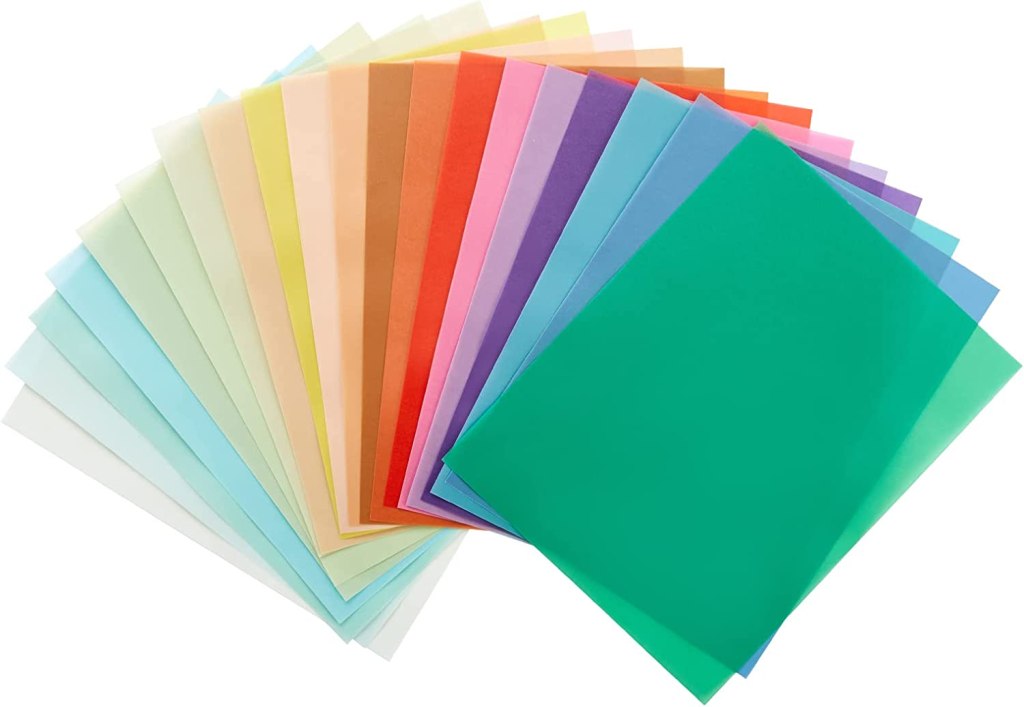
  1. Tracing Paper

This is a fairly low-tech way to annotate a book without directly writing on it. The method is simple: cut the tracing paper down to match the size of the pages, write the page number you’re annotating on the bottom of a piece, and annotate the tracing paper over the page of the book. Storage can be a little tricky, but a paperclip works just fine until you’re able to get something a little more put together. My personal favorite is when you have different colors of tracing paper and can color-code via book, genre, or whatever you choose!

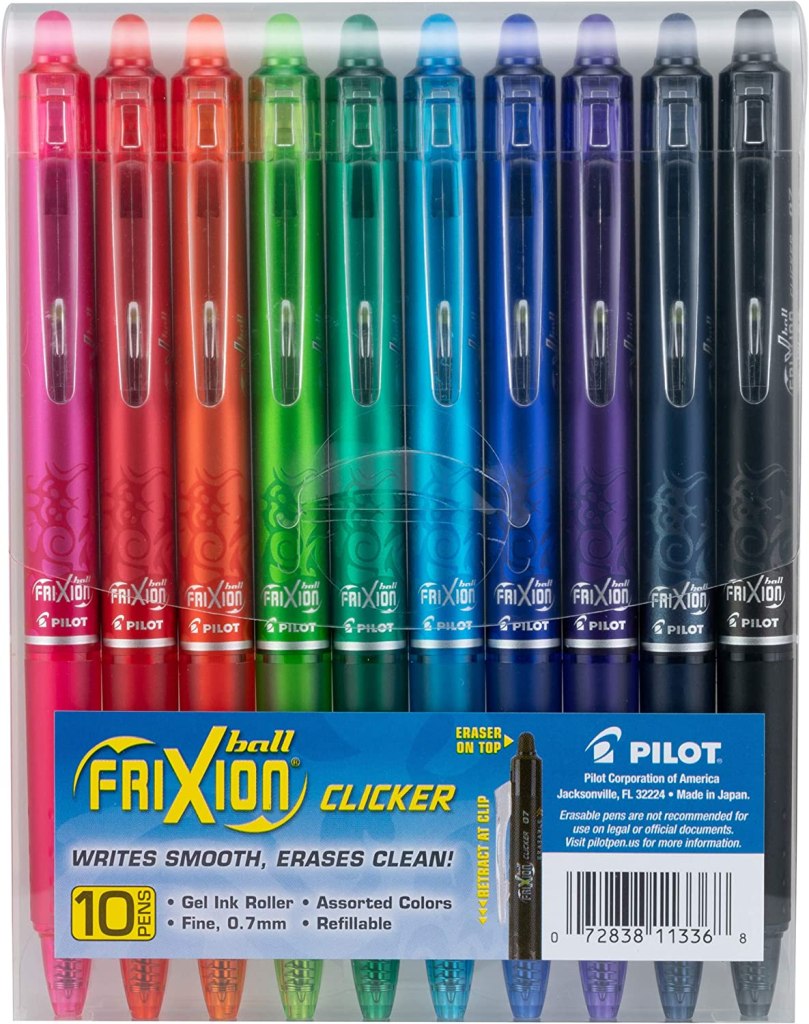
2. Pilot Frixion Pens

These are some of my favorite pens to use in any situation! The purple ones are my favorite, but I use the red pens to check student work, and blue pens for book annotation. The pens themselves are erasable when exposed to heat over 60 degrees Celsius. The back of the pen has a rubber nub that easily heats the ink up, but if you want to pretend it’s magic for your kids, you can use a hairdryer and it works just as well! Frixion pens come in all colors, and the most popular colors have cartridge refills so you don’t have to buy a new pen every time your ink runs out.

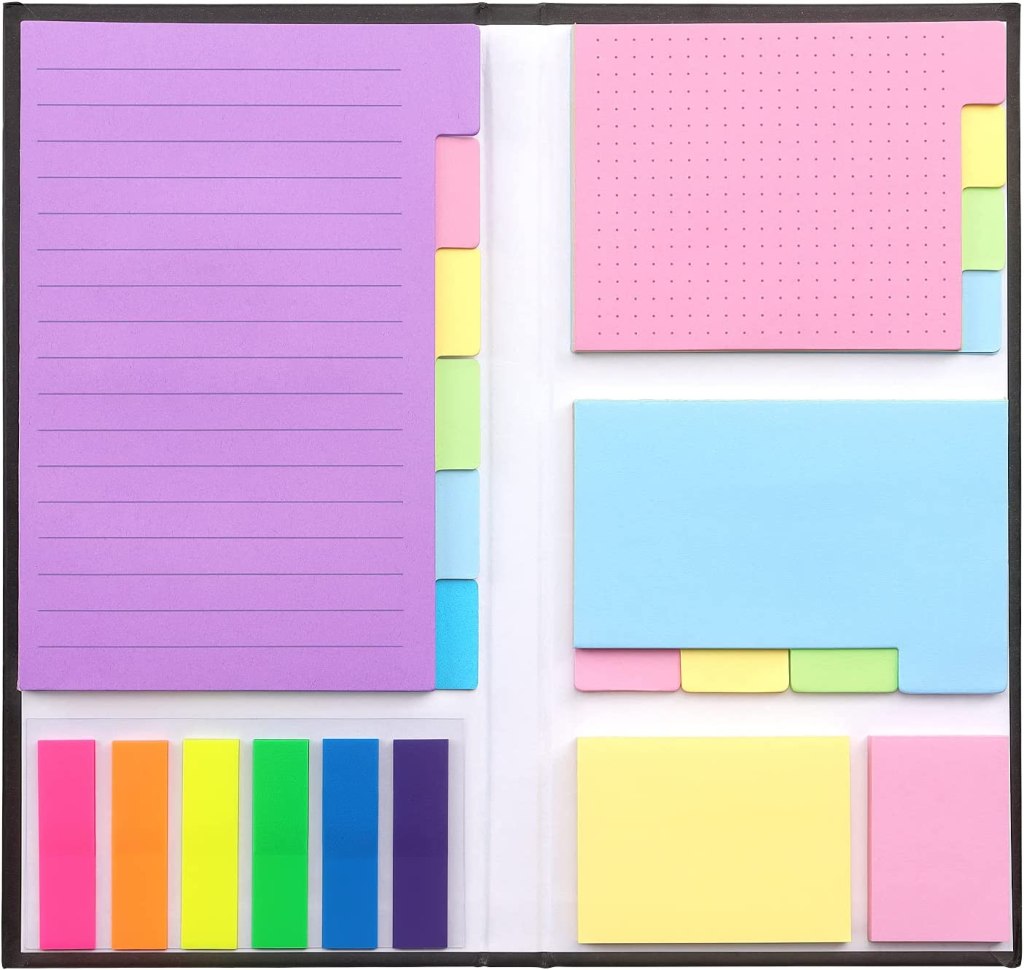
3. Sticky Notes

A tried and true classic, sticky notes are the easiest way to annotate your books and keep them clean. You can use them to mark pages, parts on the page, and take notes without marking the pages themselves. If you want to go the extra mile, you can even coordinate pages in a notebook with pages in the book to take more in-depth notes about your reading. I love having a variety of sticky notes to use, in different colors, shapes, and patterns, so I found some for you guys that have that variety!

Happy Annotating!

Posted in Blog

How to Avoid the Dreaded “Sequel Slump”: Three Tips on Making Your Sequels Shine

One of the worst things about being a writer is writing the follow-up to a well-received book. You’ve sat with the good reviews for a while, let them build up your self-esteem, and then… you have to write the sequel. Everyone can name at least one sequel that fell short of the high standards set by its predecessor, and hopefully everyone can also name a sequel that went above and beyond the standards that its predecessor set. While writing my own sequel to Waxing Moon, the first book in the Moon Trilogy, I picked up a few tips that helped Waning Moon stand apart and above the standards of the first book.

1: Add a new point of view or main character

If you’re stuck on how to make your sequel feel fresh and interesting, adding a new point of view can help bring a new perspective (pun intended) to the events of the story you are telling. Authors like Brandon Sanderson, Maggie Stiefvater, and Emily St. John Mandel are great examples on how to handle point of view changes within a single book. While you can simply label each chapter with the point of view character’s name, look for other ways to make your characters stand out from each other.

One of the things I did to make sure that readers knew the difference between Ashlyn and Talia, even without the point of view labels, was giving them their own unique details to focus on. Talia is a werewolf, so she mainly pays attention to the smells and sounds in her scenes. Ashlyn, on the other hand, focuses on what she can see and feel. They both use music analogies to help make sense of their surroundings, which helps keep the points of view connected. It also helps them feel like part of the same story, rather than two separate stories sewn together.

2. Specifically define the stakes, world, and character’s abilities

The best part of writing a sequel is that you can really start to dig into the central conflicts of your story. The heavy lifting of the worldbuilding is done. You did that in the first book, painting the rules your characters and world have to follow in broad strokes. Now you can get down to the nitty gritty details. If your character fails the task set, what, exactly, happens? What do they risk losing? What do they gain if they succeed? Most importantly: does that character want to succeed? You don’t necessarily have to answer these questions in the final edit, but knowing the answers yourself will help you fill out your character’s motivations and the stakes in place.

You can also take the sequel to start exploring aspects of the world you’ve established in the first book. Are there new places that are important to your characters that you haven’t fully explored yet? Do you have a secondary world that needs to be filled out more? The sequel is a great place to do this! It adds more stakes and fills out the world you’ve created. It can give your readers a stronger connection to your world or characters as well, since there will be more places that they can connect with.

3. Get Weird!

The main thing to remember is that you’re not writing for anyone except yourself. It can be easy to get stuck in your own head and focus on making everything perfect. While it’s important to stay consistent and keep your writing high quality, it’s also important that you are still enjoying yourself. I usually take the time in my sequels to get weird. Inject some humor to lighten a situation, or add a fun way for your characters to describe something.

In the case of Waning Moon, I took a dangerous trip through the Wildlands and gave Ashlyn a chance to make a terrible pun about the situation. After flying through a cloud of butterfly-looking creatures with razor-sharp wings, she deadpan calls them “cutterflies”. It’s a light moment in an otherwise heavy situation, and is also undeniably weird.

Final Thoughts

Writing a sequel shouldn’t be daunting, but it can often be difficult to feel like you can meet the expectations of a great first novel. Hopefully, these tips give you a place to start, and help make your sequel the best it can be!

Posted in Blog

The Wheel Continues On…

Hello everyone!

I have a very exciting announcement to make. After I finished writing The Ghost and the Real Girl, I thought I was finished with stories from Caelum, but it seems I wasn’t quite done yet.

All her life, Adi has felt at home underground. The daughter of copper miners, it was expected that she would follow her parents’ into the Red Mines as soon as she was old enough. Only now, she wakes to find gemstones in her bed every morning, and veins of copper find their way to the surface whenever she walks past. At first, she rejoices, thinking that her parents won’t have to work for days on end, but soon it becomes clear that each time she brings something to the surface, it vanishes from below, making the mountain crumble underneath them.

She does her best to hide her new abilities, but the small town she has lived in all her life turns on her, cursing her as a witch. That is, everyone except for Wren, the keeper of the mine’s glowfrogs. The two strike up a fast friendship, with Adi’s gems buying everything they need, and Wren singing them to sleep every night.

Suddenly one day, an earthquake buries her father and the other miners under ten tons of rock, trapping them deep underground. Adi must summon all of her new magic to find a way through the caves that snake their way through the mountain before they run out of air, water, and hope.

A companion to THE GHOST AND THE REAL GIRL, THE STONE SINGS TRUE is a story of endurance, family, and finding your place when the ground shifts beneath you.

Posted in Blog

Launch Party!

It was quite lovely! We had a few people talking about it online, and it was a lot of fun!

The setup for the launch party (ft Grace’s tail in the background)