Hello everyone! We reached 5 preorders on This Delicate Flame, which means that the first three chapters are now available for FREE!
I hope you enjoy the chapters!
THIS DELICATE FLAME, a new cozy sapphic romantasy, releases March 30th!
Hello everyone! We reached 5 preorders on This Delicate Flame, which means that the first three chapters are now available for FREE!
I hope you enjoy the chapters!
THIS DELICATE FLAME, a new cozy sapphic romantasy, releases March 30th!
If you are interested in hiring my services as an editor, please reach out via the Contact Me page!
Hello! Welcome to the first post in my series about the Craft of Writing. This series will cover different aspects of building a novel, from setting, to characters, to love interests, to plot. Today’s lesson is on worldbuilding, or creating the setting for your characters to inhabit. First, I’ll lay out the steps to creating a full, fleshed out setting, and then I’ll show you how I did it in my popular novella The Ghost and the Real Girl. Ready? Let’s go!
Now, I know what you’re thinking. “But Avery! How can I create a setting without knowing the name?”
Think about the towns you have visited. The places you have traveled to. And yes, the places you have read about. Most cities, towns, and villages share one major naming convention. They are named after a geographic feature nearby. This geographic feature could be a river, a forest, a hill, or a man-made thing like a fort or a castle. If it isn’t named after geography, it might be named after an important person in history, or named as a translation of something else.
Regardless, all of these naming conventions share a common thread: history. So, to name your setting, you need the landscape and history of it first. Which brings me to my second point…
We all love food. It’s part of the joys of being human. It can also be an easy way to develop your setting, and make it feel more fleshed out and solid. Think about the food your characters eat.
Specifically, you should think about three things with that food.
1. Staple grains
These are the rices and wheats of the world. The sorghum and barley and amaranth. What kinds of grain are grown? What kinds are easily accessible? Grains like wheat and barley need flat, open space to grow, while rice grows best in terraces with plenty of water. Deciding the staple grains will give you a clue to the climate and weather of your setting, and will tell you if you’re writing about a plains setting, or a mountainous setting.
2. Produce
Ah, fruits and vegetables. Truly one of life’s great pleasures. These are perhaps the biggest clue to climate in a setting. Citrus fruits grow best in a tropical setting, whereas stonefruits like plums and cherries thrive in cooler climates. Vegetables are similar. What veggies are easy to grow there? Are they tough and small from lack of water, or are they large and juicy? Answering these questions will help you figure out how much rainfall your setting gets, as well as the soil quality, which will help tell you the general wealth of the people living in your setting.
3. Meat
Another great indicator of social class is the kind of meat you have available in your setting. Coastal towns will be heavy on fish, while light on pasture animals like cows or sheep. Poultry can be widely available anywhere, but do they keep the birds for meat, or for eggs? What do they use to keep the meat from spoiling? Do they eat every part of the animal? Are certain meats only for the wealthy? If so, how do they decide which meats are?
Thinking about food is a great way to begin thinking about the mechanics of your setting. After all, your setting isn’t just a pretty backdrop for your characters to play against. It’s a living, breathing world that exists beyond the bounds of your story. Which brings me to the last thing.
It’s a common saying that “money makes the world go around,” and there’s a reason for that. Everyone thinks about money. Do they have enough? Do they want more? But how can money help develop your setting?
Most money, historically speaking, is based on something that has value. While this has most often been precious metals, other things have been used as well. Sand dollars, cocoa beans, and salt have all been used as currency by different cultures around the world. The kind of currency you create, as well as its values, will go a long way towards establishing your setting.
Do you have mainly a barter economy? Does your setting have coinage? If so, who or what is on the coins? What are the coins made of? Is there counterfeiting? How do people carry the currency around? What are the dangers in carrying the currency that way?
Thinking about coinage can also help develop the mining culture in your setting, and how industrialized your setting is. If metals are easily available and worked, then your setting might have a high degree of industrialization. If they aren’t, your setting might be more primitive. If the metals are repurposed from something whose function is now lost, that tells you something about your setting as well.
The Ghost and the Real Girl is a spooky, cozy novella set in the city-state of Caelum. The city is built around the concept of a sundial, based on a massive crystal Spire in the middle. There are satellite farms and mining towns stretched out around it, and much of the city is controlled by a religious sect known as The Church of the Wheel. TGatRG has been praised for its immersive, atmospheric worldbuilding, and much of that is attributed to the steps I listed above.
To start: landmarks. The biggest landmark in the city is the giant crystal Spire in the middle of the city. This Spire is old- much older than the city around it- and casts colors on the building in the city as the days pass. The city also has a canal wrapped around it, with old, magical pumps at the mouth where the river splits to form the canal.
With these two landmarks, I was able to start developing the concept of a city that was divided into sections, where the wealthy would live in the area that gets the most Spirelight, and the poor live in the section that gets the least. The connection to a sundial also gave me the idea of the Wheel of the Year, and to split the city into four districts named after the seasons.
Next, food. I already had a massive economic divide built into my city, and I needed to make the food represent that. There are farms positioned all around Caelum that send in all of the food they need. Most of then food goes to the wealthy, and the food left to the poor needs to be split and stretched. So, the main character of TGatRG, Sera, eats mainly pies and stews. These are easy ways to stretch meat and vegetables a little farther. The other main character, Clem, is horrified at these conditions, because she was once a member of the wealthy class. That dichotomy allowed me to develop the setting even further by creating a distinct divide.
Finally, currency. Since the city was already split into a wheel-like pattern, with twelve roads creating “spokes” of the wheel, it was a logical step to make the highest coin denomination wheels. They are silver coins created with a hole in the middle that characters can run a string through. Wheels can be split into bronze ha’moons, which can be split even further into small copper crescents. It’s eight crescents to a ha’moon, and three ha’moons to a wheel. Wheels are given in strings of three, six, nine, or twelve. This allowed me to give my characters ways to interact with the world based on how much money they have or didn’t have, while also developing the industry of Caelum. It’s a somewhat industrialized city, but not enough to have paper notes. There’s a strong socioeconomic divide that my characters have to reckon with.
There are many other things about Caelum that make it a fascinating setting to both read and write about, but the three main things are there. Landmarks, food, and money. The next time you want to create a setting, but don’t know where to start, try these tips!
My name is Avery Carter, and I’m an indie author with six books currently on the market, including the Amazon Top Ten bestseller The Ghost and the Real Girl. I have a Bachelor’s in English Literature and a Master’s of Fine Arts in Creative Writing, and am dedicated to making the art of writing more accessible for anyone who wants it.
When I was sixteen, I bought a cool-looking dragon notebook from Barnes and Noble with my Christmas money. I had no idea what I would write in it, but later that week, an idea came to me: a girl with red hair, dreaming of a werewolf every night. I didn’t know it yet, but that small idea would eventually become Waxing Moon, my debut novel, and its sequel Waning Moon. Now, I’m working on the third and final installment in the Moon Trilogy, and all of the big, complicated feelings that come with it. How do I take these characters, who I have loved with, fought with, brought through the worst parts of their lives, and give them the ending that they deserve? How do I say farewell to the characters that have carried me through the last fourteen years of my life? How do I give them a satisfying ending?
Leaving a Crack in the Door

I just spent an hour trying to think of a satisfying response to those questions, and honestly? I can’t. There is so much that has happened in my life, so much that these characters have brought me through, that to just say goodbye to them feels unthinkable. So, I’ll just say: it’s not goodbye.
At least, not yet.
These books will always be a part of me. They will always be the deepest, darkest pieces of my life, pulled out of my chest and put on a page for readers to dissect. I once thought they would be my magnum opus. I realize now that those were the thoughts of a child, dreaming. I have so many more stories in me, little Avery. We’re not done yet. These characters will live on, as people discover our books and read the stories we created. The door isn’t fully closed yet. There’s still a sliver of light there.
The Way Forward

I still don’t know how I’ll feel when I’m finally finished with the last book. Will I feel sad or elated? Will I be scared? Will I be happy? One thing is certain: I will definitely feel. After so much nothing in my life, that’s a good thought to have.
After I finish the Moon Trilogy, I’m going to take a break to focus on finishing my MFA program. There are some new stories there that I’m working on, and I’m excited to start sharing with you. My Caelum stories are going to go on the back burner for the time being, and my thesis novel will be my main project. There might be some short stories posted between now and then, so be sure to keep your eyes out!
Thank you everyone for staying with me through this whole trilogy. I’m so glad I was able to share these characters and their story with you. Let’s take our next steps forward together!
I love love LOVE the recent push for diversity in the publishing industry, and I thought it would be a good time to bring back some old content I created a while ago, and give it a bit of a fresh face.
Just a note: the links on this post are Amazon Affiliate Links, and I do earn money from any qualifying purchase. With that out of the way, let’s get started!
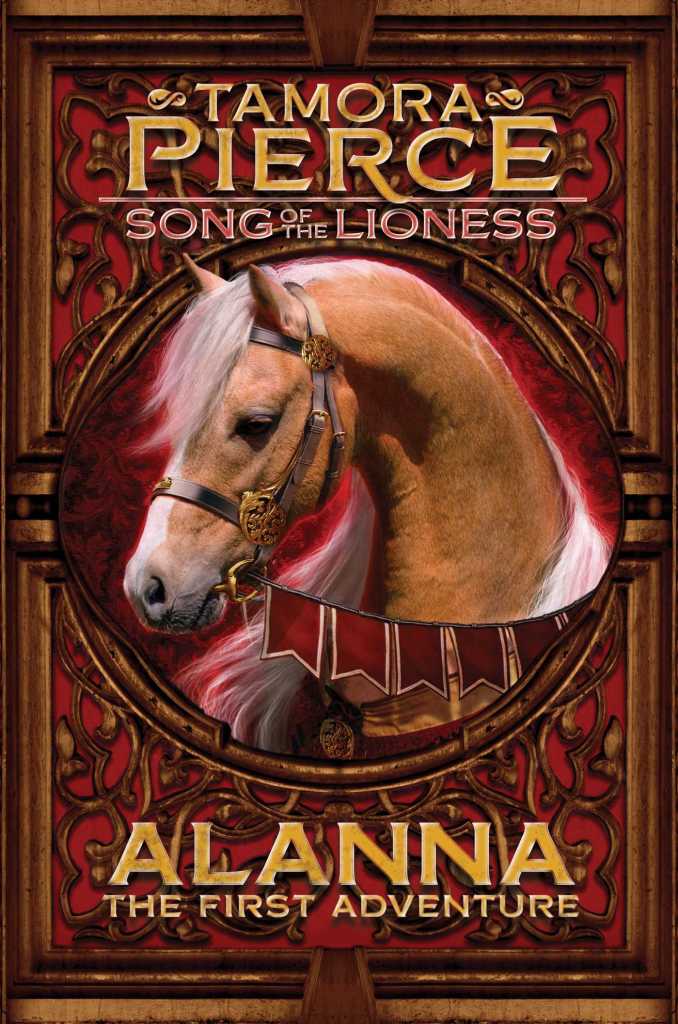
A series of quartets, duets, and trilogies, the Tortall books cover every aspect of high fantasy that you want. They begin with The Song of the Lioness, a quartet about Alanna of Trebond, a ten year old girl who disguises herself as a boy to become a knight. With knights, magic, magical creatures, and dragons, these books are full of diverse heroines and messages that are definitely worth reading.
2. Daughter of…
View original post 632 more words
Those who don’t know me well might be surprised to know that I struggle with depression, and have for some time now. I cycle between having enough energy to masquerade as a human being, with bright eyes and a clean face, and being a strange cave goblin hiding in a hoodie, sleepwalking through the world as I go from home to work and back again. My doctor tells me it’s a co-morbidity of my autism diagnosis, along with my anxiety and panic disorders. I tell him it’s also probably the C-PTSD. He agrees with me.
This is the foundation of our relationship. I tell him I have a shorter temper. He changes my medication. I tell him I can’t sleep. He recommends talk therapy. I try talk therapy. It’s too expensive to do regularly so I have to stop. I still can’t sleep. I’m more short-tempered. He changes my medication. Rinse and repeat.
I’m okay for four days out of five, then three days out of five, then four again, then two, then four. The weeks where I can be okay for all five days of the work week are further and further in between. Sometimes it’s because of pain– a compacted L4-L5 joint sends pain spiking through my hip if I do such strenuous activities as bending down or crossing my legs when I sit. Sometimes it’s due to sensory needs. Loud second graders are not great when you have hyperacusis and sound sensitivities. And sometimes, it’s watching my book sales dwindle down after an initial rush in the first few weeks. There are many things that could make me Not Okay, and also many things that can make me feel a little more okay.
The last few weeks of autumn are spiraling down around us, with the leaves from Japanese maple trees floating through the air. They create negative space constellations against the grey November sky, constantly moving and shifting into new patterns. It finally smells like autumn too; drying leaves and a hint of frost on the air in the early morning. There is enough of a chill that warm coffee tastes even more delicious, especially with a warm scone to eat with it. It’s cold enough that I can start baking again, so long as I have enough energy to bake. I hope that I will this year. I miss baking.
This post was originally meant to be a musing on how to keep things moving and spinning even when you’re depressed. Unfortunately, I don’t really have any words of wisdom to share on that subject. All I know how to do is keep my own plates spinning, and hope that if I drop one, it isn’t too fragile.
Thanks so much for the book spotlight!
Hello, everyone! Today I have a real treat! It has been a while since I’ve done any spotlights, and this author was kind enough to reach out about their book, which releases on Halloween. Below you’ll find all sorts of info about the book, including the link to pre-order it. The story is only 124 pages, which is the perfect length to curl up with on Halloween night and finish it in one sitting.

View original post 859 more words
Live now on Instagram! Check out my_graceless_heart for a chance to win!
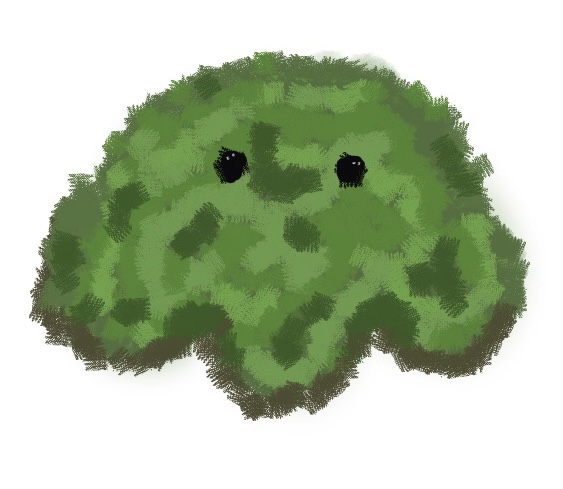
“It’s a flyken,” Clem replied absently, reading another part of the script. “It says here they’re guardian spirits. They watch over the stones, but they don’t like people very much.”
Meet the flyken– a small, moss-like creature living in the forest groves around Caelum. They’re shy creatures, preferring to hide out of the sight of humans. Think of them like living, walking moss with three legs.
We’ll be giving away two handmade flyken keychains as part of the ARC giveaway TOMORROW! Be sure to tune in on Instagram at my_graceless_heart at 7 pm KST for a chance to win one of these adorable creatures of your own, and many other interesting prizes!


 Avery Carter